

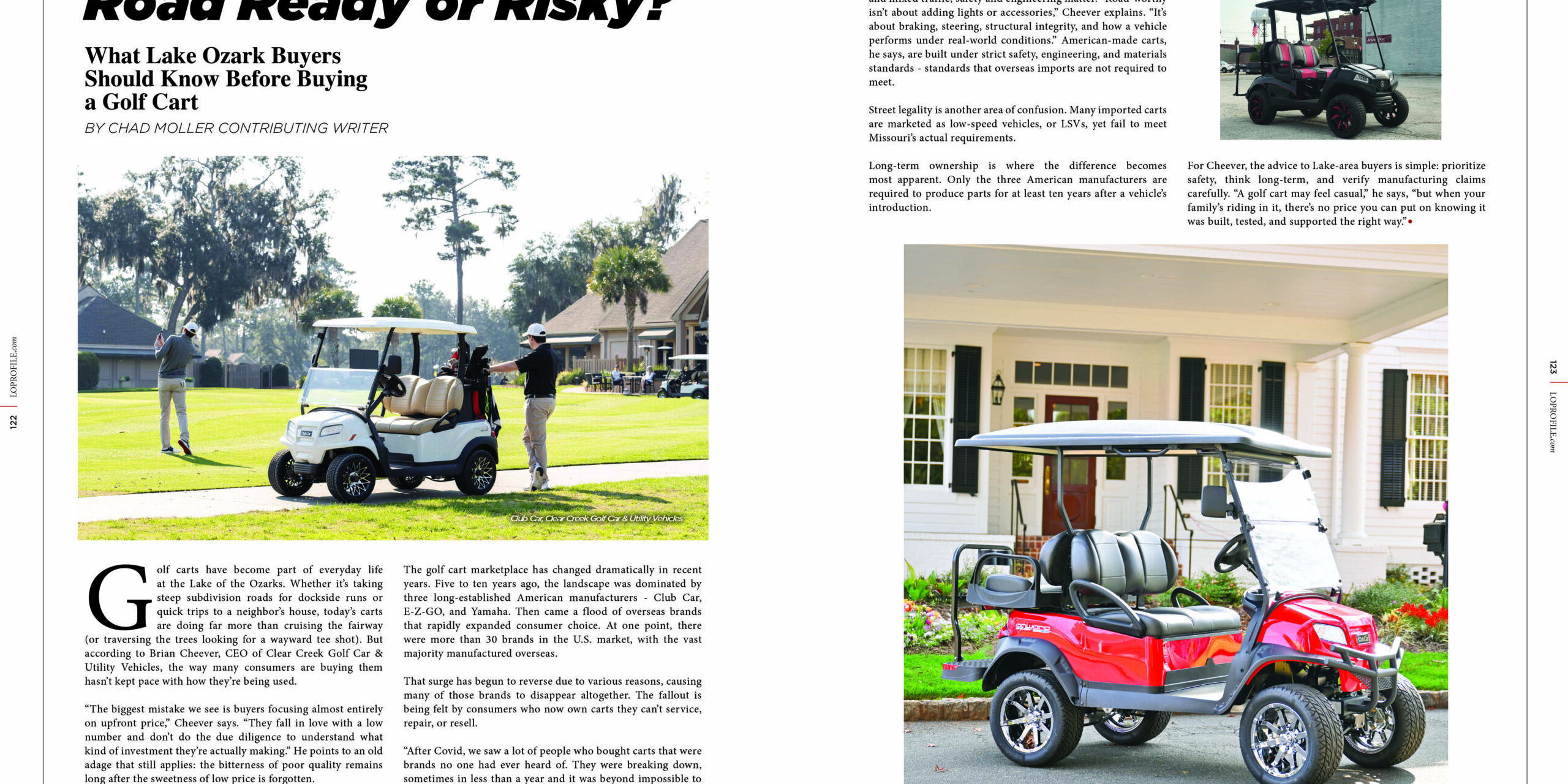
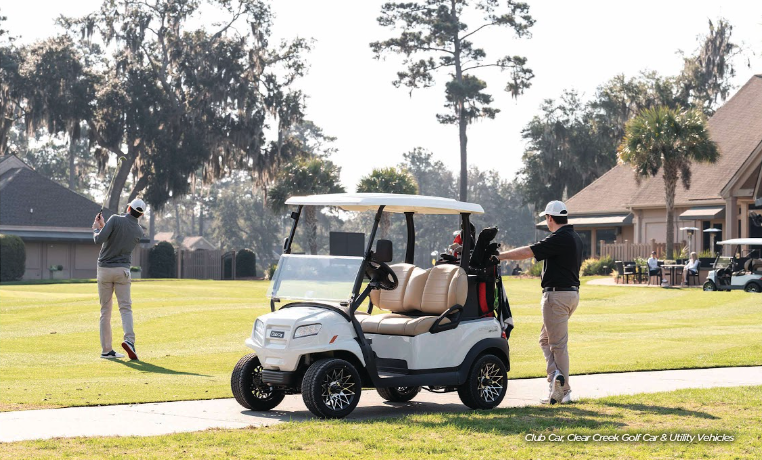
 Golf carts have become part of everyday life at the Lake of the Ozarks. Whether it’s taking steep subdivision roads for dockside runs or quick trips to a neighbor’s house, today’s carts are doing far more than cruising the fairway (or traversing the trees looking for a wayward tee shot). But according to Brian Cheever, CEO of Clear Creek Golf Car & Utility Vehicles, the way many consumers are buying them hasn’t kept pace with how they’re being used.
“The biggest mistake we see is buyers focusing almost entirely on upfront price,” Cheever says. “They fall in love with a low number and don’t do the due diligence to understand what kind of investment they’re actually making.” He points to an old adage that still applies: the bitterness of poor quality remains long after the sweetness of low price is forgotten.
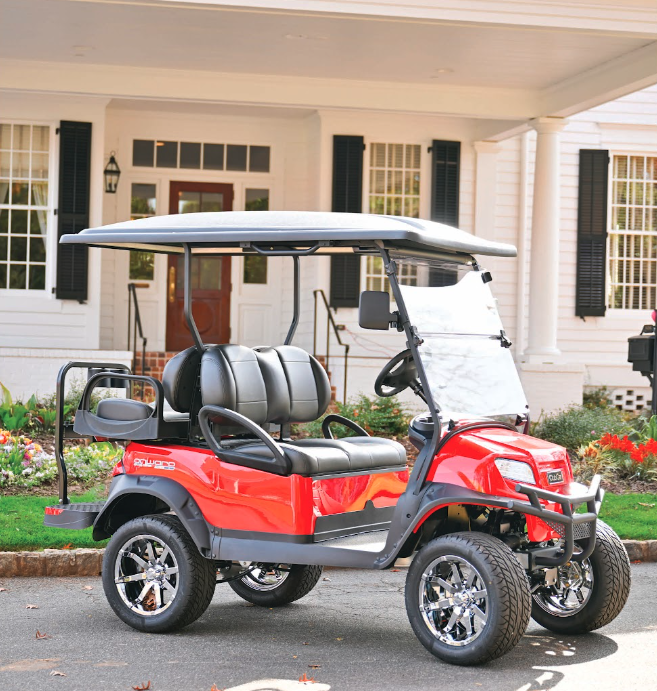 The golf cart marketplace has changed dramatically in recent years. Five to ten years ago, the landscape was dominated by three long-established American manufacturers – Club Car, E-Z-GO, and Yamaha. Then came a flood of overseas brands that rapidly expanded consumer choice. At one point, there were more than 30 brands in the U.S. market, with the vast majority manufactured overseas.
That surge has begun to reverse due to various reasons, causing many of those brands to disappear altogether. The fallout is being felt by consumers who now own carts they can’t service, repair, or resell.
“After Covid, we saw a lot of people who bought carts that were brands no one had ever heard of. They were breaking down, sometimes in less than a year and it was beyond impossible to get parts for them.” shared Rob Martinez with TNT Caddyshack Golf Cars.
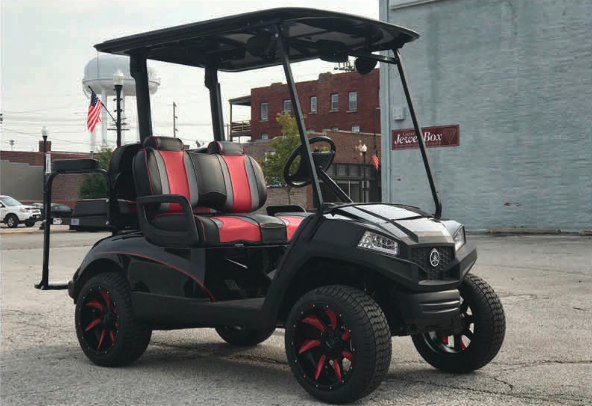 Around the Lake, where carts routinely navigate hills, pavement, and mixed traffic, safety and engineering matter. “Road-worthy isn’t about adding lights or accessories,” Cheever explains. “It’s about braking, steering, structural integrity, and how a vehicle performs under real-world conditions.” American-made carts, he says, are built under strict safety, engineering, and materials standards – standards that overseas imports are not required to meet.
Street legality is another area of confusion. Many imported carts are marketed as low-speed vehicles, or LSVs, yet fail to meet Missouri’s actual requirements.
Long-term ownership is where the difference becomes most apparent. Only the three American manufacturers are required to produce parts for at least ten years after a vehicle’s introduction.
For Cheever, the advice to Lake-area buyers is simple: prioritize safety, think long-term, and verify manufacturing claims carefully. “A golf cart may feel casual,” he says, “but when your family’s riding in it, there’s no price you can put on knowing it was built, tested, and supported the right way.”