

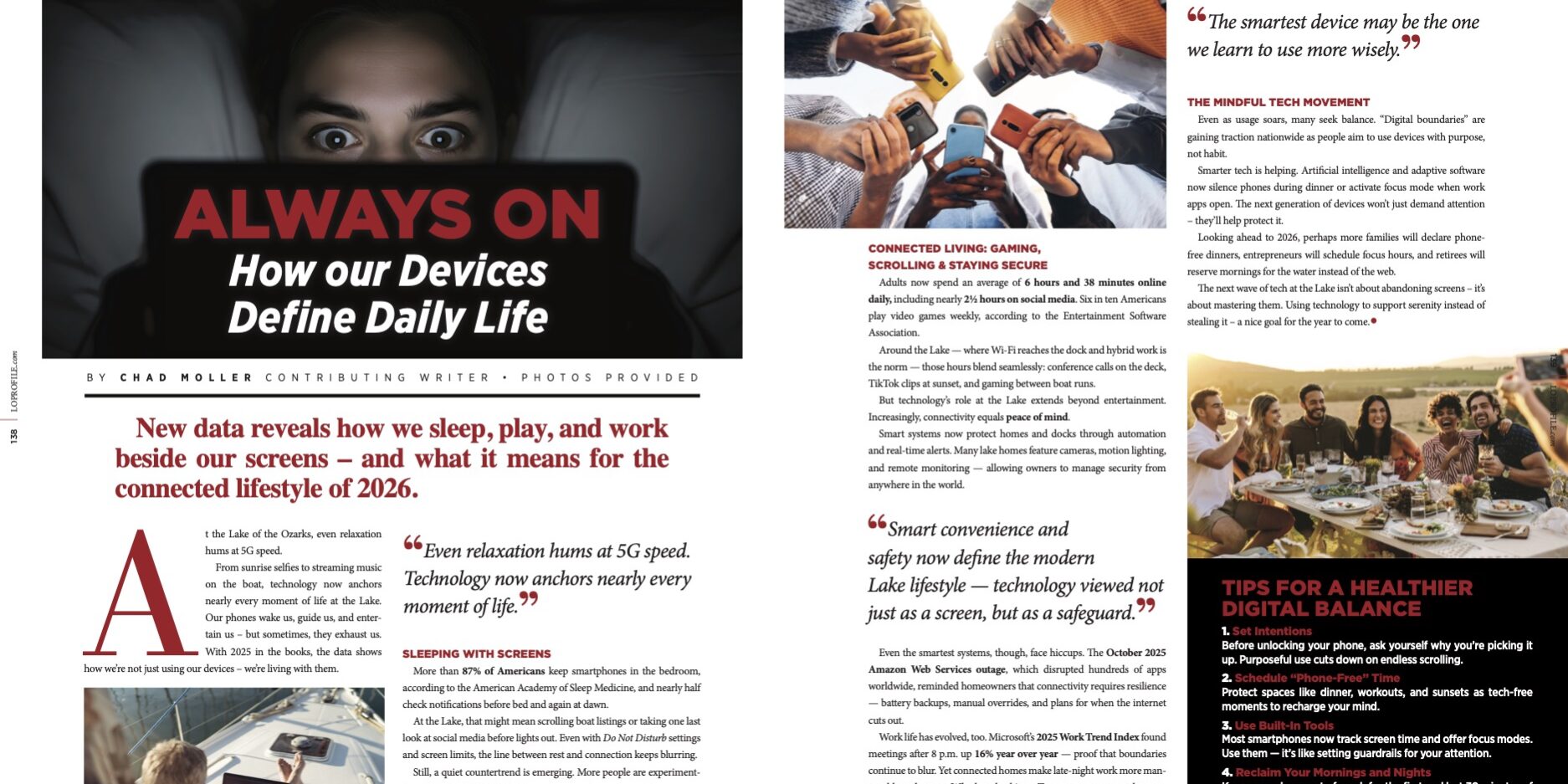
 At the Lake of the Ozarks, even relaxation hums at 5G speed.
From sunrise selfies to streaming music on the boat, technology now anchors nearly every moment of life at the Lake. Our phones wake us, guide us, and entertain us — but sometimes, they exhaust us.
With 2025 in the books, the data shows we’re not just using our devices — we’re living with them.
“Even relaxation hums at 5G speed. Technology now anchors nearly every moment of life.”
SLEEPING WITH SCREENS
More than 87% of Americans keep smartphones in the bedroom, according to the American Academy of Sleep Medicine, and nearly half check notifications before bed and again at dawn.
At the Lake, that might mean scrolling boat listings or taking one last look at social media before lights out. Even with Do Not Disturb settings and screen limits, the line between rest and connection keeps blurring.
Still, a quiet countertrend is emerging. More people are experimenting with “digital detox” habits — charging phones in another room or enforcing no-screen hours after sunset. Experts say these small steps reduce stress and improve sleep, making unplugging the new luxury.
CONNECTED LIVING: GAMING, SCROLLING & STAYING SECURE
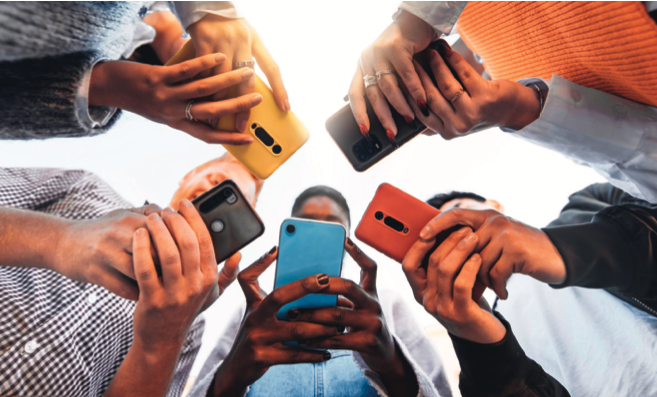
 Adults now spend an average of 6 hours and 38 minutes online daily, including nearly 2½ hours on social media. Six in ten Americans play video games weekly, according to the Entertainment Software Association.
Around the Lake — where Wi-Fi reaches the dock and hybrid work is the norm — those hours blend seamlessly: conference calls on the deck, TikTok clips at sunset, and gaming between boat runs.
But technology’s role at the Lake extends beyond entertainment. Increasingly, connectivity equals peace of mind.
Smart systems now protect homes and docks through automation and real-time alerts. Many lake homes feature cameras, motion lighting, and remote monitoring — allowing owners to manage security from anywhere in the world.
“Smart convenience and safety now define the modern Lake lifestyle — technology viewed not just as a screen, but as a safeguard.”
Even the smartest systems, though, face hiccups. The October 2025 Amazon Web Services outage, which disrupted hundreds of apps worldwide, reminded homeowners that connectivity requires resilience — battery backups, manual overrides, and plans for when the internet cuts out.
Work life has evolved, too. Microsoft’s 2025 Work Trend Index found meetings after 8 p.m. up 16% year over year — proof that boundaries continue to blur. Yet connected homes make late-night work more manageable and secure. Whether checking a Teams message, a weather app, or a camera feed, Lake residents show that digital connection can mean confidence, comfort, and control.
“The smartest device may be the one we learn to use more wisely.”
THE MINDFUL TECH MOVEMENT
Even as usage soars, many seek balance. “Digital boundaries” are gaining traction nationwide as people aim to use devices with purpose, not habit.
Smarter tech is helping. Artificial intelligence and adaptive software now silence phones during dinner or activate focus mode when work apps open. The next generation of devices won’t just demand attention — they’ll help protect it.
Looking ahead to 2026, perhaps more families will declare phone-free dinners, entrepreneurs will schedule focus hours, and retirees will reserve mornings for the water instead of the web.
The next wave of tech at the Lake isn’t about abandoning screens — it’s about mastering them. Using technology to support serenity instead of stealing it — a nice goal for the year to come.